Introduction
Did you know that the first 60 minutes of your day can decide your entire wellness journey?
Most people get out of bed with difficulty as soon as they wake up in the morning, pick up the phone straightaway, get ready in a hurry, and start their day in a reactive mode. Then they start wondering why they feel so stressed and tired and why they are always running behind their health goals.
But successful and healthy people know one thing very well: how you start your morning decides the flow of your entire day. The right morning routine doesn’t just make your day better—it can compound with time to transform your entire life.
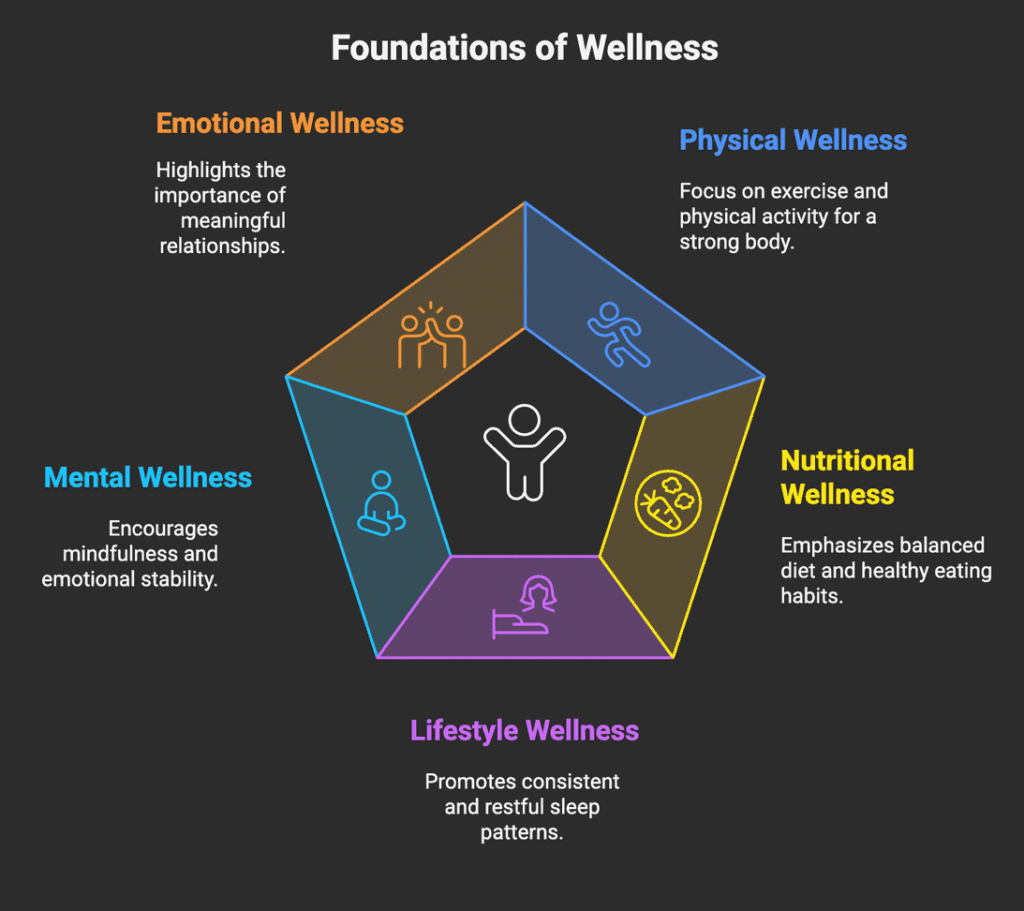
I’ve studied the morning routines of thousands of people who have achieved lasting transformation in their health and identified 10 simple habits that consistently deliver amazing results. These are not complex rituals that require hours of preparation. These are practical and science-backed habits that easily fit into your busy schedule. Each component of your Morning Routine plays a vital role in you
Get ready to learn how you can change your health forever by following an intentional morning routine for just 30 days. Let’s get started.
Why Are Morning Routines So Powerful?
Before we get to specific habits, it’s important to understand why morning routines are so effective:
Willpower is highest: In the morning, you have the maximum mental energy and capacity to make decisions.
Compound Effect: By taking small steps in the morning, you build up a good momentum that keeps your energy and focus strong throughout the day.
Hormonal advantage: Cortisol levels are naturally higher in the morning, which gives you a natural energy boost for healthy habits.
Consistency factor: Morning routines are easier to follow since there are fewer distractions or interruptions in the morning.
According to research by the American Psychological Association, people who establish morning routines have a higher probability of maintaining long-term healthy habits, and their life satisfaction level is also higher.
The 8 Transformative Morning Routines
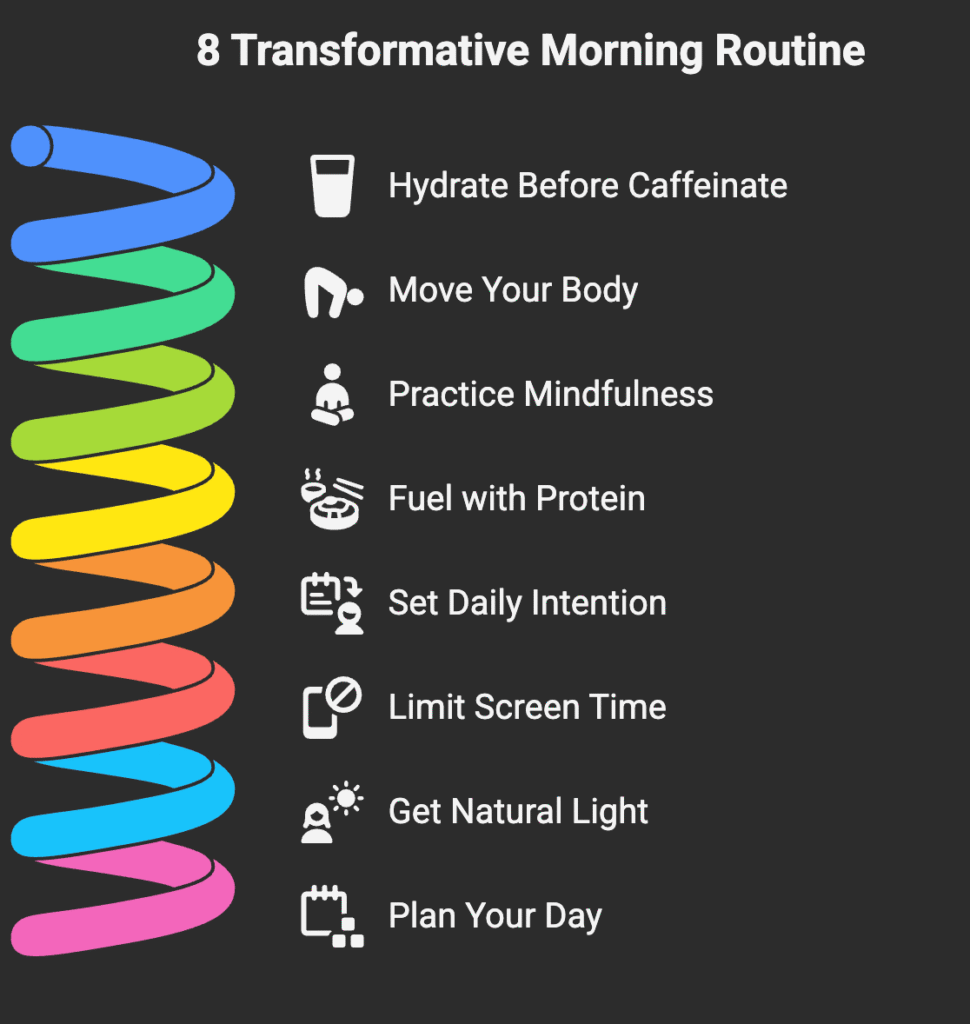
Habit 1: Hydrate Before You Caffeinate (Your Morning Routine sets the tone for a successful day.)
What to do: As soon as you wake up in the morning, drink 16-20 cups (a large glass) of water before taking tea, coffee, or any other drink.
Why it works: After 7–8 hours of sleep, your body is naturally dehydrated. Drinking water activates metabolism, flushes out toxins, improves brain function, and also keeps appetite under control. Studies say that drinking water first thing in the morning can boost metabolism by up to 30% for the next 90 minutes.
How to start:
- Keep a large glass or bottle near the bed
- You can add a little sea salt or lemon for an electrolyte boost
- Try to keep the water at room temperature (it’s more gentle on your system)
Pro tip: If you keep forgetting, drink water while your coffee is brewing. This creates an automatic habit loop.
Expected results: boost in energy, clarity in thinking, improvement in digestion, and reduction in afternoon fatigue.
Note: Transforming your Morning Routine can lead to better health outcomes.
Habit 2: Move Your Body for 5–10 Minutes (Establishing a positive Morning Routine can empower your mindset.)
What to do: Do some gentle movement in the morning—that is, stretch, take a brief walk outside, do some yoga, or practice those simple bodyweight exercises.
Why it works: Morning movement boosts blood circulation and releases endorphins, some of nature’s healing agents. Stretch every day for a few minutes, and the result is that you are more flexible all over. For the body, even light movement can provide fuel and power for another 6–8 hours.
Movement Options:
- Gentle stretching: Should concentrate on the spine, hip joints, and shoulders (Incorporating exercise into your Morning Routine boosts energy levels.)
- Walking: Go for a walk around the house
- Yoga ‘flow’: Five to ten simple body postures
- Bodyweight exercises: Push-ups, squats, planks
How to get started:
- Before anything else, pick one type of movement and plan on doing it for only 5 minutes
- Consider the place you intend to do it in every day—is feasible—to ensure that this becomes a habit, or regular practice
- Don’t focus on the degree of exercise or results achieved, but rather on how you feel
Pro tip: Get the night before workout clothes ready. When you wake up in the morning, they’ll be right there in front of your eyes. The decision then becomes easier.
Expected results: Mood becomes considerably better, spirit even higher, body posture improves progressively, and you gradually make the move toward regular exercise.
Note: Implementing a structured Morning Routine might be the key to achieving your health goals.
Habit 3: Practice 5 Minutes of Mindfulness (Mindfulness should be a priority in your Morning Routine for better mental health.)
What to do: Focus fully on the present moment through breathing, meditation, or simply consciously observing your surroundings.
Why it works: Mindfulness practice reduces cortisol (stress hormone) levels, improves emotional regulation, improves focus, and increases the capacity to handle daily stress. Harvard research says that just 8 weeks of regular mindfulness practice causes physical changes in brain structure.
Simple mindfulness exercises
- Deep breathing: Deep breathing: Inhale deeply through your nose in 4 seconds, hold it in your nose in 4 seconds, and then exhale out via your nose in 6 seconds
- Body scan: Observe the sensations that are taking place in the body, from head to toes
- Gratitude meditation: Think of 3 things you are really grateful for
- Mindful observation: All you need to do is watch nature, the clouds, or the surroundings around you, but not judge anything
How To Start
- Use a simple app such as Headspace or Calm to guide you through
- Set a gentle timer for five minutes
- Find a nice and calm location (even your bed is OK)
- Do not bother with the question of whether I am doing it correctly or not—be present
Pro tip: Add mindfulness practice to a daily routine, such as making some mindful time when your coffee is being brewed or after your morning brushing.
Expected Result: less stress and anxiety, enhanced emotional control, increased concentration, and greater calmness during the day.
Note: Many successful individuals attribute their achievements to a well-planned Morning Routine.
Habit 4: Fuel Your Body with Protein (Nutrition plays a critical role in your Morning Routine and sets the day’s pace.)
What to do: Include 15–25 grams of protein in your breakfast or morning meal.
Why it works: Protein keeps blood sugar stable, makes you feel full for longer, supports muscles, and provides steady energy. Studies say that consuming protein within 2 hours of waking up in the morning improves metabolism and significantly reduces cravings throughout the day.
Easy protein sources:
- Eggs: ~6g protein per egg, a quick and versatile option
- Greek yogurt: 15-20 g of protein per serving
- Protein smoothie: a combination of fruits, vegetables, and protein powder
- Nuts & seeds: like almonds, chia seeds, hemp hearts
- Cottage cheese (paneer): ~14g protein per half cup
How to start:
- Cook protein-enriched food at night
- Keep hard-boiled eggs in the fridge ready to go
- Once in a while, make large portions of protein muffins or overnight oats
- Mix protein powder into smoothies or oatmeal
Pro tip: If you don’t feel like eating in the morning, start with a small protein smoothie, gradually increasing the quantity.
Expected results: The level of energy will be more balanced during the day, there will be a decrease in mid-morning hunger, increased focus, and there will be no unnecessary cravings in the afternoon.
Note: Creating your ideal Morning Routine can be a game-changer.
Habit 5: Set Your Daily Intention (Every successful Morning Routine begins with a clear intention.)
What to do: Take a few minutes to identify what your top priority for the day is, and then how you’ll want to feel today.
Why it works: Intentional living minimizes decision fatigue and boosts motivation, and helps to align your daily actions with what you value. According to research, people who set intentions daily have a 42% higher chance of achieving their goals.
Simple intention-setting ideas:
- Priority focus: “What is that one thing I will do today that will make me feel successful?”
- Emotional intention: “How do I want to feel today?” (e.g., calm, energised, focused)
- Value alignment: “How can I respect my values today?”
- Gratitude focus: “What am I most grateful for right now?”
How to start:
- Write your intention in a journal or phone notes
- Say it out loud to yourself in front of the mirror
- Create a simple morning affirmation
- Connect your intention with your daily schedule
Pro tip: Intentions should always be simple and positive. For example, instead of saying, “Don’t be stressed,” say, “I choose to be calm and centered.”
Expected results: more focus and motivation, better decisions, a strong sense of purpose, and clarity and alignment in daily actions.
Note: Understanding the importance of a Morning Routine can motivate you to make changes.
Habit 6: Limit Phone and Screen Time (Make your Morning Routine a non-negotiable part of your day.)
What to do: Do not look at your phone, email inbox, or social media within the first 30-60 minutes in the morning.
Why it works: Immediate screen exposure bombards your brain with stimulation and information, causing a stress response and reactive thinking to kick in. The screen-free start will help you to keep your energy calm and concentrated.
Benefits of a screen-free morning:
- Significant decrease in anxiety and stress
- Better focus and the ability to think more creatively
- Better-planned beginning of the day
- Enhanced mood and dynamic control of emotions
How to start:
- Charge up your phone outside the bedroom to avoid late-night scrolling.
- Wake up with an old-fashioned alarm clock rather than your phone
- Turn your bedroom into a phone-free zone
- Rather than reaching for your phone first thing in the morning, replace it with a new intentional act (such as stretching, journaling, or drinking a glass of water)
Alternative activities:
- Read 2-3 pages of a great book
- Journaling or writing something
- Viewing the nature outside the window
- Just have some real talk with a family member
Pro Tip: If you have to check your phone, do your 2–3 morning habits all done and complete before picking up the phone.
Expected Results: Reduced stress in the morning, improved concentration during the day, improved mood, and increased sense of control over your schedule.
Note: Reflecting on what you appreciate can enhance your Morning Routine.
Habit 7: Get Natural Light Exposure (Your Morning Routine should include activities that energize you.)
What to do: Spend 5–10 minutes outside or sit by a bright window within an hour of waking up in the morning.
Why it works: Natural light regulates your circadian rhythm, improves sleep quality, produces vitamin D, and uplifts mood. The exposure to the morning light also results in improved night sleep.
Simple ways to get morning light:
- Go out: Just stand on the balcony or porch for 5 minutes
- Draw the curtains wide: Let in as much light as possible into the house
- Have breakfast near the window: Nutrition and light exposure are both together
- Go for a morning walk: The perfect combo of movement + light
How to start:
- As soon as you get out of bed, open all the blinds/curtains
- Have a coffee or morning water outside
- When having a phone call or doing some stretching, stay close to the window
- Cloudy days also give natural light—don’t underestimate them
Pro tip: If you wake up before sunrise, use a sunrise alarm clock or light therapy lamp. Use this to simulate natural light.
Expected results: improvement in quality of sleep, better mood, energy levels throughout the day, and seasonal mood swings are under control.
Note: Write your Morning Routine goals down to reinforce your commitment.
Habit 8: Plan Your Day in 5 Minutes (Adjusting your Morning Routine can lead to improved productivity.)
What to do: Take just 5-10 minutes in the morning to look at your schedule and prioritize the most important tasks.
Why it works: Planning reduces stress, increases productivity, and makes you feel more in control of your day. Individuals who plan their day are 3 times more likely to accomplish their priorities.
Simple planning process:
- Review schedule: Check today’s appointments and commitments
- Identifying top 3: Select only the 3 most important tasks
- Time blocking: Allot an approximate time to all tasks
- Obstacle planning: Anticipate potential challenges
- Success visualisation: Visualise that you have completed your tasks successfully
How to start:
- Keep it simple, using a planner or journal
- Try to plan in 5/10 minutes maximum.
- Perfection does not deserve to be chased, but priorities do
- Leave a little buffer time each day for unexpected situations
Pro tip: When you feel that you are too busy in the morning, do the planning at night and spend 2 minutes reviewing it in the morning.
Expected results: increased productivity, a decrease in stress and overwhelm, improved time management, and a high level of satisfaction at the end of the day.
Note: Embracing a consistent Morning Routine can significantly enhance your overall health and productivity.