Activated charcoal everything. Celery juice cleanses. Ice baths at 5 AM. Bulletproof coffee with MCT oil. If you’re feeling a little overwhelmed by the latest wellness trend, you’re not alone.
The fact is this: By the time you can say “adaptogenic mushroom latte,” the wellness industry has already launched a new trend. But the principles of real health and wellness have remained fairly consistent for decades, despite thousands of new trends.
Today, I’m breaking down 7 popular wellness trends for you so you can understand what works and what’s just hype. Focus your time and energy on things that work for you.
The Wellness Trend Cycle
Before you dive in, let’s take a look at how wellness trends usually work:
- A famous celebrity or influencer with a large platform tries something new
- Early adopters share dramatic before/after results
- A hype builds on social media—with beautiful photos and viral reels
- Companies start making money by selling products and programs based on the trend
- When the results don’t live up to the hype, people start getting disappointed and the backlash begins.
- And then a new trend comes along to fill the void
What’s the problem?
This cycle forces us to repeatedly run after something external, when the real need is to create a sustainable and personalised wellness routine that works for us in the long term.
7 Wellness Trends: Fad or Truly Last?
Trend 1: Intermittent Fasting
The Claim: Intermittent fasting between certain time windows will help in increasing metabolism and brain performance, as well as longevity.
The Truth: These effects of intermittent fasting are scientifically recognized, including improved insulin sensitivity and stimulation of cell repair mechanisms, such as autophagy.
The Reality Check. It may be useful to individuals who are naturally inclined to consume fewer meals, individuals with insulin resistance, and even individuals with a busy schedule.
However, there are circumstances to be careful when you have a history of disordered eating, or you are a pregnant/breastfeeding woman, or you have a special medical condition.
Timeless Principle: It is most important to listen to the signals that your body sends in terms of hunger and fullness. Regardless of whether you are eating 3 meals a day or 16:8 fasting, true wellness occurs when you decide to eat due to the true needs of your body, not due to the strictness of having a routine.
Trend 2: Detox Cleanses and Juice Fasts
The Claim: Your body is full of toxins that need to be “flushed out” with special juices, detox teas, or cleanse programs.
The Truth: Your liver, kidneys, lungs, and digestive system already have a highly advanced detox system that works 24/7—and does not require any special products.
The Reality Check: You may feel good initially because you are eliminating processed foods and temporarily increasing nutrients.
But the problem is that these cleanses are often very restrictive, can slow metabolism, and trigger the binge-restrict cycle.
Timeless Principle: Support your body’s natural detox systems—drink lots of water, eat fiber-rich foods, get good sleep, move a little every day, and limit alcohol and processed foods.
Trend 3: Extreme Morning Routines
The Claim: High-achievers get up at 5 a.m., go into ice baths, and do some crazy one-hour morning routine, so in case you want to be successful, you should too.
The Truth: Intentional morning habits can definitely make your day better, but the “perfect” routine is different for everyone. Everyone’s body clock, energy level, and lifestyle are different.
The Reality Check: What works: Consistent habits that align with your schedule and personality.
What doesn’t work: Blindly following someone else’s routine without understanding your life circumstances.
Timeless Principle: Make routines according to your life. If you follow even a 10-minute morning routine regularly, it is much more effective than a perfect 90-minute routine, which you give up after a week.
Trend 4: Superfood Obsession
The Claim: Certain specific foods like acai, goji berries, spirulina, etc., have so many “magical” health benefits that are not found in regular foods.
The Truth: These “superfoods” are definitely nutritious, but they are not more important than the overall diet pattern. Your long-term health is shaped by what you eat consistently every day.
The Reality Check: Nutrient-dense foods are good, but blueberries, spinach, salmon, and sweet potatoes are equally powerful.
The problem occurs when we focus on just one food and ignore the rest of our overall eating habits.
Timeless Principle: Include a variety of colorful, whole foods in your meals. When you maintain a balance of fruits, vegetables, lean protein, and healthy fats in your diet, you get more long-term benefits than from one “superfood.”
Trend 5: Biohacking and Optimization
The Claim: You can “hack” your biology through some specific devices, supplements, and protocols so that you achieve maximum performance.
The Truth: Some biohacking tools, like sleep trackers or heart rate variability monitors, can provide useful data, but real transformation comes from the basics, not gadgets.
The Reality Check: This can be helpful for people whose foundational habits are already strong and who want to fine-tune their routine.
But the point is missed when people focus on optimization and ignore basic pillars like sleep, nutrition, and stress management.
Timeless Principle: Master the fundamentals first. Get regular good sleep, follow a balanced diet, do a little movement daily, and learn to manage stress—only then will you be able to get the most out of any advanced tool.
Trend 6: Extreme Exercise Programs
The Claim: High-intensity and extreme workouts are the fastest and most effective way to get fit and healthy.
The Truth: Intense exercise definitely works, but it is not necessary or safe for everyone. Everybody has different capacities and needs.
The Reality Check: It works for people who enjoy the intensity, have a strong movement foundation, and take proper recovery time.
However, the drawback is that it poses a greater risk of injuries and the possibility of burnout. And is not sustainable by most individuals in the long term.
Timeless Principle: The most appropriate exercise is that which you can do regularly. A mere 20 minutes of walking daily is more effective in the long run than a high-intensity exercise that you do once in a blue moon.
Trend 7: Supplement Stacking
The Claim: Taking different supplements in specific combinations optimizes your health and performance.
The Truth: The majority of individuals can obtain all the nutrients they require from food only, and the necessity of supplements differs based on the healthiness of an individual, lifestyle, and body.
The Reality Check: In certain instances, it is beneficial, like vitamin D in low-sunlit regions or B12 in vegan cases, or a particular deficiency that may be identified through testing.
However, the vast majority of the population does not require supplements; they just eat a balanced diet that includes plenty of variety in their whole food intake and do not have serious health matters.
Timeless Principle: First, eat, and then supplement. Ensure that your diet is nutritious, and in case it is needed, you could opt to take specific supplements once you are tested or prescribed by a physician.
How to Evaluate New Wellness Trends
Before jumping into the next wellness trend, ask yourself these questions:
Questions:
Is this long-term sustainable? Could I realistically follow this for a few months or years?
Does this match my lifestyle and values? Or am I just trying to copy someone else’s style?
What is the evidence behind this? Are there peer-reviewed studies or just testimonials?
Am I going after a quick fix? Or am I building long-term healthy habits?
Does this wellness trend match my basic health needs? Am I ignoring the fundamentals in pursuit of flashy things?
Timeless Wellness Principles That Never Become Outdated
What’s trending today may vanish tomorrow—but these proven practices always work.
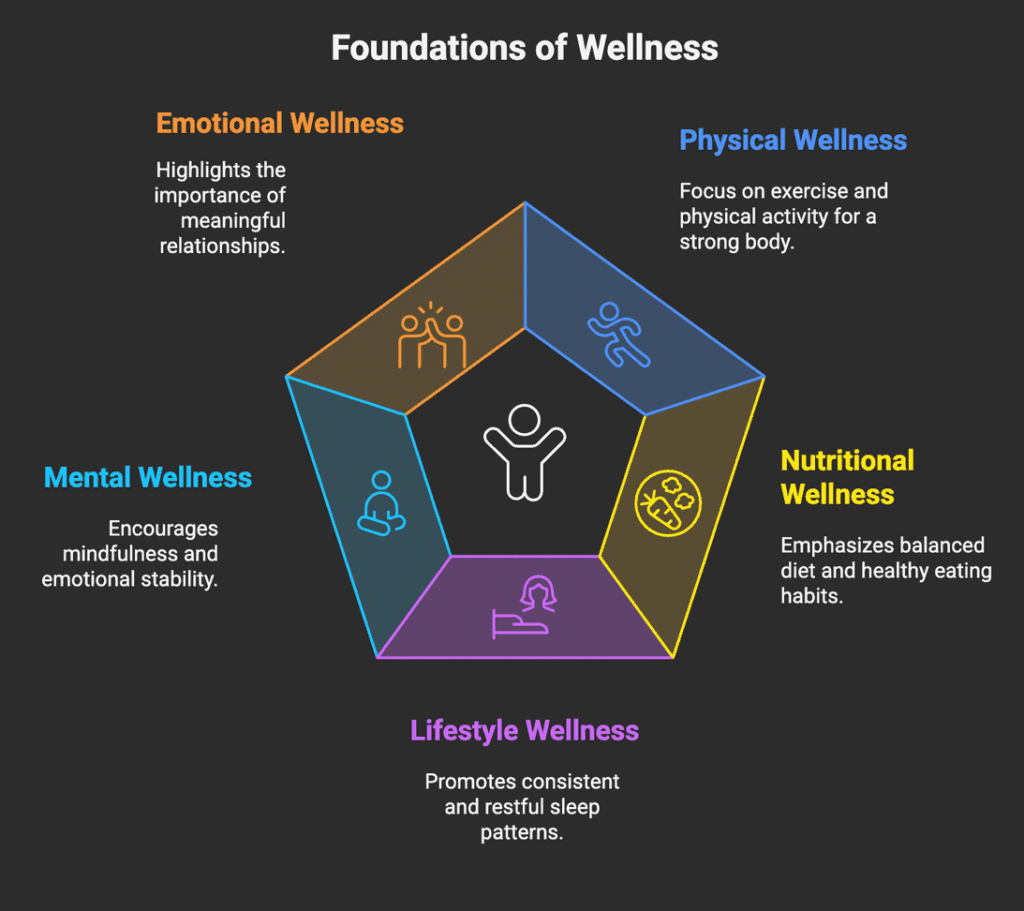
Foundation Habits:
- Proper sleep (mostly 7–9 hours for adults)
- Regular movement (Do what lights you up—and do it with consistency.)
- Whole foods nutrition (with variety, moderation, and taste)
- Stress management (whatever way works for you)
- Social connections (give importance to relationships)
- Purpose and meaning (involve in work that is meaningful to you)
Sustainable Approach:
- Progress over perfection—even small improvements count
- Consistency over intensity—every day a little bit It is better to do it
- Individual over universal—everyone’s journey is different
- Long-term over quick-fix—only sustainable changes bring lasting results
Your Wellness Reality Check
Take a moment to assess honestly:
Which wellness trends are you following right now? Do they align with your values and seem sustainable long-term?
Are you ignoring basic things just because new and fancy strategies seem more exciting?
How much of your time and mental energy are you spending on wellness trends, and how much on basic healthy habits?
What would happen if you focused on timeless wellness principles for the next 30 days, without any new trends?
Bottom Line:
It’s never wrong to try new wellness methods—experimentation can be an important part of your health journey. But instead of blindly following a new trend, it’s important to give it some thought. The question isn’t whether the trend is popular or not—the question is, will it work for you?
Remember:
The wellness trend that becomes a natural, consistent part of your life is the most powerful.
And sometimes the simplest advice—such as eating vegetables, getting enough sleep, taking a walk, and managing stress—is the most life-changing.
Now, about you:
What healthy trend have you tested?
What succeeded, what failed, and what did you learn about yourself in the process?
Share your experience. Your story can turn into a guide for someone.