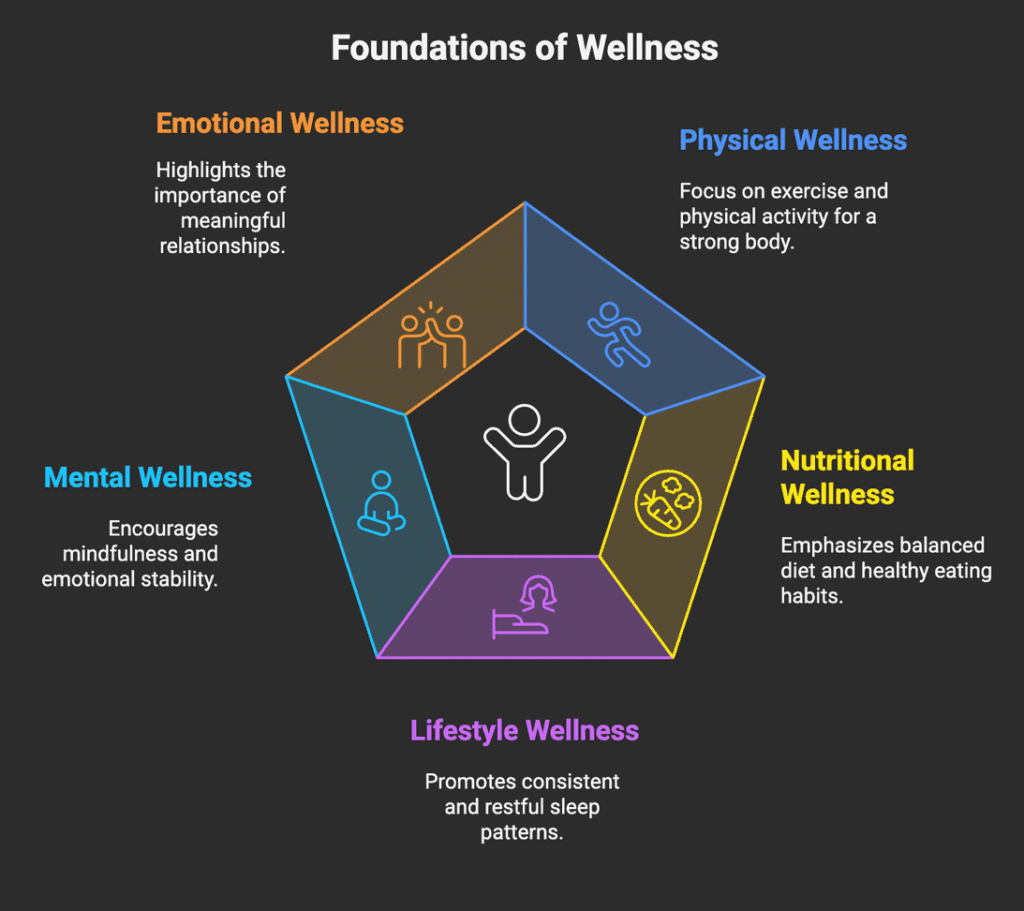
Specific Health Areas
Q14: How does a holistic health approach to nutrition work?
A: Unlike ordinary nutrition, holistic nutrition takes into account not only what you are eating, but how, when, and why.
What to eat:
- Whole and minimally processed foods
- Coloured and nutritious foods
- Energizing foods
- A balanced mix of quality protein, healthy fats, and complex carbohydrates
How to eat:
- Mindful eating and eating free of any distractions
- Savoring each bite and eating slowly
- Paying attention to your signals of hunger and fullness
- Enjoying food without guilt
When to eat:
- Regular meal timings that support your energy
- Listen to your body: start eating when hunger strikes, and stop once you’re full
- When you eat should be according to your routine and the needs of your your body
Why should you eat?
- Learn to distinguish physical hunger and emotional hunger
- Understand food as fuel and medicine
- Develop a healthy relationship with food
Q15: What role does exercise play in holistic health?
A: Holistic exercise is not just about physical fitness—it is much more than that:
Physical benefits:
- Heart health (cardiovascular health)
- Improvement in strength and flexibility
- Weight management
- Supporting the immune system
Mental benefits:
- Reducing stress
- Improving mood
- Better concentration and cognitive function
- Getting good sleep
Emotional benefits:
- Increasing confidence
- Stress relief
- Social connection with group activities
- A fulfilling sense of accomplishment and pride in completion
Holistic exercise principles:
- Choose activities that you genuinely like
- Listen to and respect your body’s needs
- Keep a balance of different types of movements
- Take time to rest and recover
- Exercise for the joy and strength it brings, not just for looks