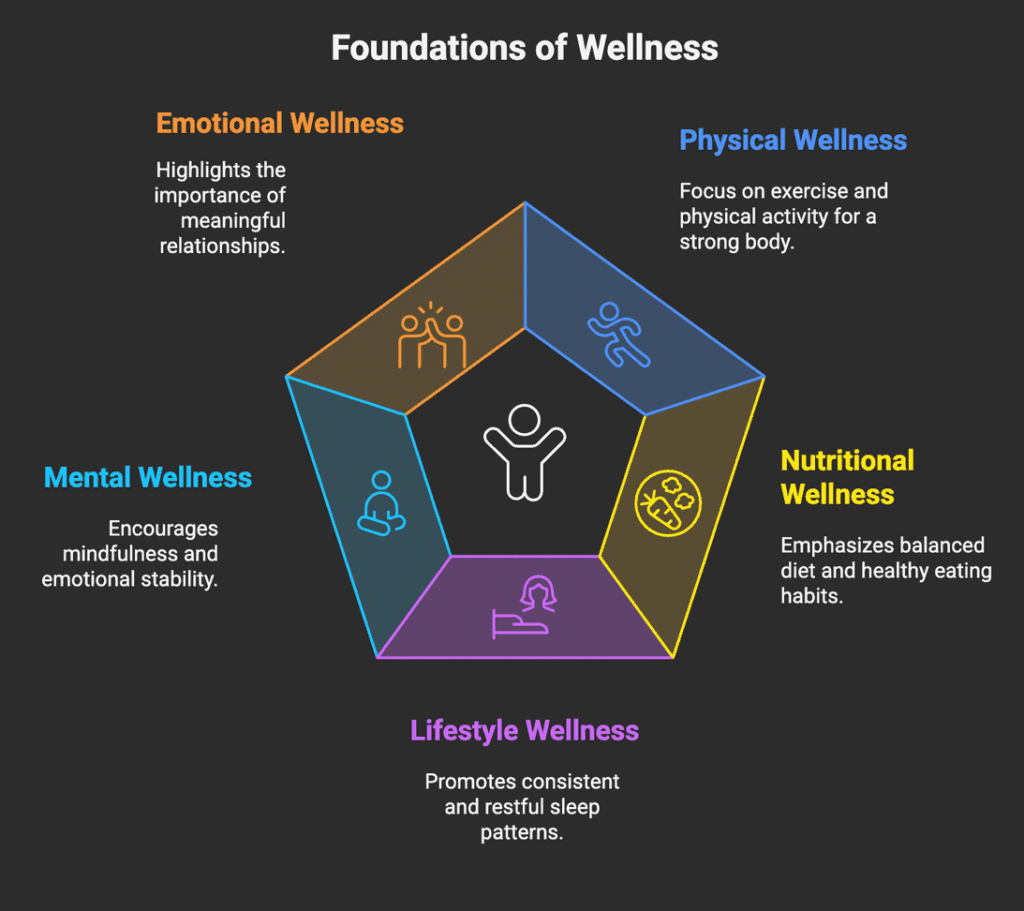
Q3: Does science support holistic health approaches?
A: Absolutely! Research repeatedly proves that lifestyle factors play a 70–80% role in preventing chronic diseases. Studies conducted by institutions such as Harvard Medical School and the Mayo Clinic clearly show that holistic approaches:
- The risk of chronic disease can be reduced by up to 50%
- Mental health improves
- Overall quality of life improves
- Healthcare costs reduce
- Recovery from illness is also faster
The mind-body connection was considered merely “alternative,” but now it is quite established in the medical literature. Psychoneuroimmunology (which studies how our thoughts and emotions affect the immune system) has also become a recognized medical field.
The Mind-Body Connection
Q4: How does the mind-body connection work?
A: The mind-body connection works through several biological pathways:
Nervous System: Your thoughts and emotions trigger chemical responses in the body that affect the whole body. Stressful thoughts release the cortisol hormone, while gratitude and positive thinking increase serotonin (the happiness hormone).
Immune System: Consistent negative emotions weaken the immune system, while positive emotions boost immune function. Studies also show that optimistic people have a stronger immune response to vaccines.
Cardiovascular System: Emotional stress directly affects heart rate, blood pressure, and inflammation. Research has shown that meditation may be as effective as some medicines in lowering blood pressure.
Digestive System: Our gut has more nerve cells than the spinal cord, and it produces 90% of the body’s serotonin. This is why the health of the gut has a direct impact on our mood and mental clarity.